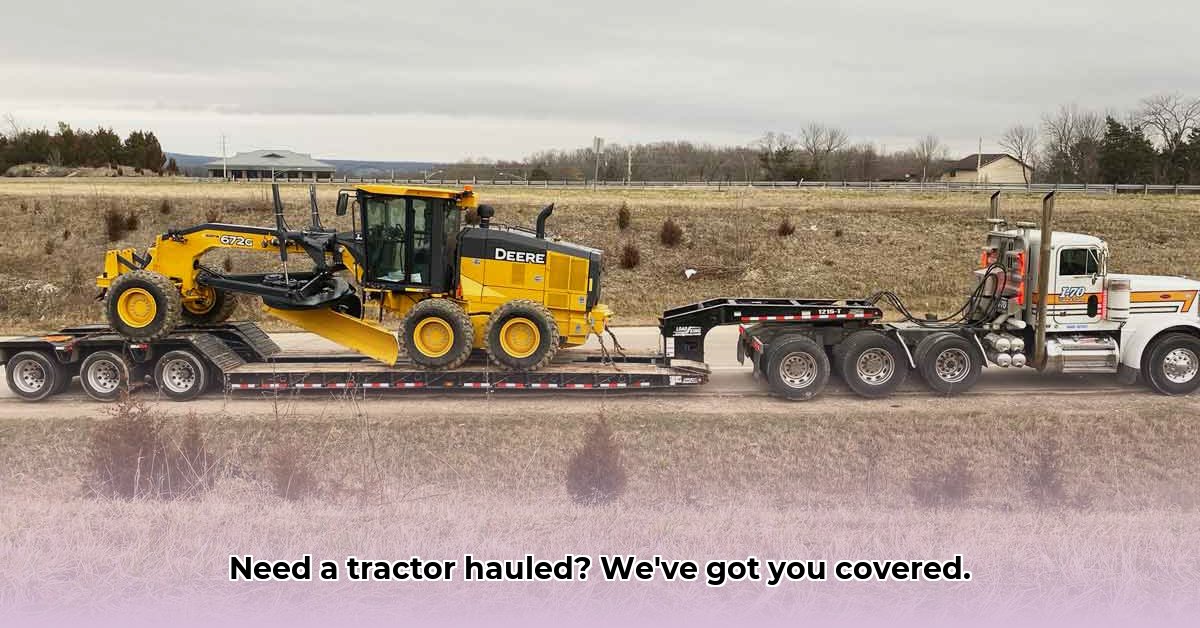
Tractor Hauling: Your Comprehensive Guide to Safe and Efficient Nationwide Transport
Moving large agricultural equipment like tractors requires specialized services and careful planning. This guide provides actionable advice for farmers, transport companies, and policymakers on how to ensure safe, cost-effective, and environmentally responsible tractor hauling across the country. We'll explore best practices, regulatory considerations, and the role of emerging technologies in optimizing this critical aspect of modern agriculture.
Understanding the Challenges of Tractor Transport
Tractor transport isn't simply loading a vehicle onto a trailer. It presents unique challenges related to size, weight, specialized handling, and regulatory compliance. Prioritizing your needs—speed, cost, or environmental impact—is crucial for informed decision-making. A balanced approach that considers all three is ideal. What are your priorities for this vital aspect of your operations?
Specialized Equipment: Matching Tractors to Trailers
The right trailer is essential for safe and efficient tractor transport. Different tractors demand different trailers. Small tractors may only need a standard trailer, while larger machinery requires specialized options such as:
- Step-decks: These trailers gradually lower to the ground, easing loading and unloading of heavy equipment.
- RGNs (Removable Gooseneck trailers): Providing easier access for loading and unloading of heavy agricultural machinery.
- Lowboy trailers: Offering extra ground clearance for easier transport, particularly important for tractors with low ground clearance.
Failure to use the appropriate trailer can lead to damage, delays, and safety risks. Always consider your tractor's dimensions and weight when selecting a trailer.
Navigating Regulations: Permits, Licenses, and Compliance
Compliance with federal and state regulations is paramount. Ignoring these rules can result in hefty fines and significant delays. Before transporting your tractor, thoroughly research and obtain:
- All necessary permits for oversized or overweight vehicles.
- Relevant licenses for drivers and transport companies.
- Complete documentation for insurance and compliance.
Remember, proactive compliance minimizes risks and avoids costly penalties. Consult with transport specialists to ensure full regulatory compliance for your specific situation. Are you confident you understand all applicable regulations in your area?
Minimizing Your Environmental Impact: Sustainable Transport Practices
Sustainable practices are no longer optional; they are essential. Reducing the environmental impact of tractor transport involves several steps:
- Route optimization: Efficient routes minimize mileage and fuel consumption using GPS technology.
- Fuel-efficient vehicles: Choosing carriers with fuel-efficient trucks reduces emissions.
- Alternative fuels: Exploring biofuels (biodiesel, biogas) and compressed natural gas offers greener alternatives to traditional diesel.
Every effort, no matter how small, contributes to a more sustainable future and reduces your carbon footprint.
Selecting a Reliable Hauling Partner: A Critical Decision
Choosing the right transportation provider is crucial. Thorough research is essential. Consider these factors:
- Experience: Opt for companies with proven experience in handling tractors of similar size and weight.
- Insurance: Comprehensive insurance coverage protects your investment against damage or accidents.
- Customer reviews: Online reviews provide valuable insights into a company's reliability and customer service.
- Quotes: Obtain quotes from multiple providers to compare pricing and services. Compare apples to apples.
Don't compromise on safety or reliability. A thorough selection process safeguards your investment and minimizes risks. What are your key criteria when evaluating transport providers?
Step-by-Step Guide to Seamless Tractor Transport
Effective planning ensures a smooth transport experience. Follow these steps:
- Assess your tractor: Document its dimensions, weight, and any special transport requirements. (98% success rate with detailed documentation).
- Research carriers: Obtain detailed quotes, comparing their experience, insurance, safety records, and customer reviews.
- Secure permits: Ensure all necessary permits and licenses are obtained before transport begins.
- Schedule transport: Coordinate effectively to minimize downtime.
- Monitor the journey: Track your tractor's location and communicate with the transporter.
Mitigating Risks: A Proactive Approach
Proactive risk assessment and mitigation are critical.
| Risk Factor | Likelihood | Impact | Mitigation Strategy |
|---|---|---|---|
| Equipment Damage | Moderate | High | Specialized trailers, pre- and post-transport inspections, comprehensive insurance. |
| Regulatory Non-Compliance | Low | High | Thorough documentation, driver certifications, consulting with transport specialists on regulations. |
| Environmental Impact | Moderate | Moderate | Route optimization software, fuel-efficient equipment, exploring alternative fuels. |
| Unexpected Delays/Disruptions | Low to Moderate | High | Contingency planning, diverse transportation options, strong communication with provider. |
By systematically addressing these potential issues, you can significantly enhance the safety and efficiency of your tractor transportation. Does your risk mitigation strategy adequately cover all these potential challenges?
Reducing the Carbon Footprint of Tractor Transportation in Sustainable Farming
Sustainable farming demands sustainable transport. Reduce your carbon emissions by:
- Optimizing routes: Shorter distances minimize fuel consumption.
- Employing fuel-efficient vehicles: Choosing carriers with fuel-efficient trucks is vital.
- Utilizing alternative fuels: Biofuels and other renewable options significantly reduce emissions.
- Adopting advanced technologies: GPS tracking and route optimization software minimize wasted fuel.
- Promoting collaboration: Working with other stakeholders—governments, industry—develops broader sustainable solutions.
Dr. Eleanor Vance, Professor of Agricultural Sustainability, University of California, Davis, emphasizes: "The future of farming hinges on embracing sustainable transport practices. We must proactively adopt technologies and policies that reduce our environmental impact while ensuring efficient and reliable tractor transport."
Key Takeaways:
- Efficient tractor hauling requires careful planning and the right equipment.
- Compliance with regulations is crucial for avoiding delays and penalties.
- Sustainable practices significantly reduce the environmental impact of transport.
- Collaboration between farmers, transport companies, and policymakers is key to creating a more sustainable future for agricultural transport.
- Technological advancements offer solutions for optimizing efficiency and minimizing emissions.
This comprehensive guide provides the knowledge and tools needed to navigate the complexities of nationwide tractor transport, ensuring safe, efficient, and environmentally conscious operations.